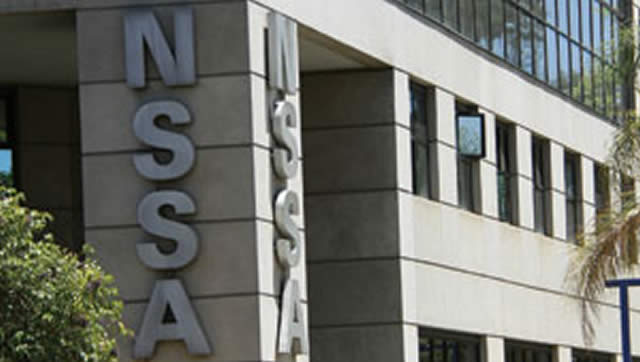
Zimbabwe statutory deductions affect payroll, cash flow and an employer’s standing with regulators. In 2026, employers must administer four central obligations correctly: NSSA Pension and Other Benefits Scheme contributions, the ZIMDEF Manpower Training Levy, the Standards Development Levy and the Accident Prevention and Workers’ Compensation Scheme.
These obligations do not all work in the same way. NSSA requires an employee deduction and an equal employer contribution. ZIMDEF, the Standards Development Levy and APWCS remain employer-funded obligations that cannot come from employee pay.
This guide explains how to calculate each obligation, which forms to use and when payment falls due. Statutory figures and procedures should receive review from a qualified M&J team member before publication or payroll implementation.
Zimbabwe Statutory Deductions at a Glance
A sound payroll process starts by separating employee deductions from employer costs. Treating every statutory payment as a deduction from salary can reduce net pay incorrectly and expose the enterprise to employee disputes or regulatory action.
| Obligation | Employee contribution | Employer contribution or levy | Calculation basis | Main form or reference |
|---|---|---|---|---|
| NSSA Pension and Other Benefits Scheme | 4.5% | 4.5% | Monthly insurable earnings, subject to the published ceiling | P4, P4A and P4C |
| ZIMDEF Manpower Training Levy | None | 1% | Monthly gross wage bill | Training Levy Declaration |
| Standards Development Levy | None | Up to 0.5% | Total remuneration | Employer SDL number |
| APWCS | None | NSSA-assigned industry rate | Total basic earnings, with no earnings ceiling | WC50 |
Only the employee’s 4.5% NSSA share comes from covered employee earnings. The employer must fund its matching NSSA share and the full cost of the other three obligations.
Step 1: Calculate NSSA Contributions
The NSSA Pension and Other Benefits Scheme, commonly referred to as POBS, requires contributions from covered employees and their employers. Coverage generally starts at age 16 and continues until, but does not include, age 65.
Apply the 4.5% employee and employer rates
Deduct 4.5% from each covered employee’s monthly insurable earnings. The employer adds an equal 4.5%, creating a combined monthly contribution of 9%.
For an employee with USD500 in monthly insurable earnings, the employee contribution equals USD22.50. The employer contributes another USD22.50, producing a total NSSA payment of USD45.
Employers should show the employee share clearly on the payslip. They should record the matching employer share separately as an employment cost.
Apply the NSSA earnings ceiling
NSSA’s published monthly ceiling stands at USD700 for remuneration in USD. The maximum employee contribution is therefore USD31.50, and the maximum employer contribution is also USD31.50.
An employee earning USD1,000 does not contribute 4.5% of the full amount under this ceiling. The payroll calculation applies 4.5% to USD700, subject to the current NSSA schedule.
NSSA can gazette contribution ceilings quarterly. Payroll teams should check the NSSA contribution calculator and the regulator’s current schedule before each payroll period rather than carrying one ceiling through the full year without review.
File the correct NSSA documents
Employers file the P4 monthly return through the NSSA Self-Service Portal. They use P4A as remittance advice and submit P4C when an employee leaves employment.
NSSA states that the combined contribution must reach it before the first day of each month. Finance teams should align payroll approval, funding and portal submission early enough to meet that requirement.
Do not extend POBS deductions beyond the coverage age
POBS deductions generally cease when an employee reaches age 65. This age rule does not remove the employer’s APWCS obligation for that employee.
Confusing the two schemes can cause an employer to stop workers’ compensation premiums incorrectly. Payroll and finance teams should maintain separate rules for POBS and APWCS, even though NSSA administers both.
Step 2: Calculate the ZIMDEF Manpower Training Levy
The Zimbabwe Manpower Development Fund administers the Manpower Training Levy. Employers fund the levy at 1% of the monthly gross wage bill and cannot recover it from employees.
Establish the full gross wage bill
The ZIMDEF calculation includes applicable directors’ remuneration, allowances and benefits. Employers should also account for relevant benefits in kind, directors’ fees, and employer pension and medical contributions when establishing the levy base.
For example, a narrow calculation based only on basic salaries may understate the amount due. The payroll report should identify each included component and reconcile the levy base to the enterprise’s remuneration records.
Calculate the levy at 1%
Apply 1% to the monthly gross wage bill. If the applicable wage bill totals USD80,000, the ZIMDEF levy equals USD800.
Where the wage bill is in foreign currency, the levy falls due in that same foreign currency. Employers should avoid converting a foreign-currency wage bill into another currency solely for levy payment.
Submit the declaration and payment
Employers register with ZIMDEF and submit the Training Levy Declaration form. The levy becomes due on the first day of the following month, while ZIMDEF’s published administrative reminder requests payment and declarations by the 15th.
A monthly compliance calendar should distinguish the legal due point from the administrative submission date. It should also assign responsibility for preparing the declaration, authorising payment and retaining proof of submission.
Our Zimbabwe payroll compliance services can support employers that need an independent review of wage-bill classifications and monthly controls.
Step 3: Account for the Standards Development Levy
The Standards Development Fund under the Ministry of Industry and Commerce administers the Standards Development Levy. The employer funds this levy and cannot deduct it from employee earnings.
Apply the statutory ceiling correctly
The statutory ceiling is 0.5% of total remuneration. Employers should confirm the rate that applies to their assessment and ensure that their payroll records support the total remuneration figure used.
The Standards Development Levy does not follow the NSSA USD700 ceiling. Applying the NSSA limit to another obligation can materially understate the employer’s liability.
Pay on the quarterly cycle
The levy follows a quarterly payment schedule. The stated deadlines are 15 April, 15 July, 15 October and 15 January.
Employers should quote their SDL number when making payment. A missing or incorrect reference can make payment allocation and later reconciliation more difficult, even when the enterprise transferred the correct amount.
The finance team should reconcile each quarterly return or payment to the three relevant payroll periods. This control helps identify late payroll adjustments, directors’ remuneration or other items that did not appear in the original monthly reports.
Step 4: Calculate APWCS Premiums
The Accident Prevention and Workers’ Compensation Scheme protects employees under a separate NSSA-administered framework. APWCS remains entirely employer-funded, has no employee deduction and carries no earnings ceiling.
Use the assigned industrial classification rate
NSSA assigns an industrial classification rate based on the employer’s activity and risk category. Employers apply that assigned rate to total basic earnings rather than selecting a generic percentage.
Published examples include 1.38% for general farming and 1.77% for general mining. These examples do not replace the rate assigned to a particular employer.
An enterprise with more than one operating activity should confirm how NSSA has classified it. Using another company’s rate, even within a related sector, may produce the wrong assessment.
Do not apply the NSSA POBS ceiling
APWCS has no earnings ceiling. The employer applies its assigned rate to total basic earnings, without limiting the calculation to the USD700 POBS ceiling.
Consider an employer with an assigned APWCS rate of 1.38% and total basic earnings of USD40,000. The premium would equal USD552, with no amount deducted from employees.
Continue APWCS for employees above 65
APWCS covers employees above age 65 even though POBS deductions generally cease at that age. Employers should therefore avoid using one age-based payroll rule for both schemes.
The employer submits form WC50 for the annual wage declaration and rate assessment. Payroll records should support the declared wage total and the industrial classification rate used throughout the period.
Step 5: Build a Monthly and Quarterly Compliance Process
Correct rates matter, but disciplined administration matters just as much. A useful process connects payroll data, general ledger entries, regulator forms and proof of payment.
1. Separate employee deductions from employer costs
Post the employee’s NSSA share as a payroll deduction. Record the employer NSSA share, ZIMDEF levy, Standards Development Levy and APWCS premium as employer expenses and liabilities.
This separation protects employee net pay and gives management a clearer view of the full employment cost.
2. Reconcile remuneration definitions
Each obligation uses a specific calculation basis. NSSA POBS refers to insurable earnings, ZIMDEF uses the monthly gross wage bill, the Standards Development Levy refers to total remuneration, and APWCS applies to total basic earnings.
A single payroll total should not feed every calculation without review. Finance and human capital teams should document which payroll codes enter each statutory base.
3. Maintain a filing calendar
The calendar should record the NSSA monthly process, ZIMDEF’s monthly declaration and payment cycle, and the Standards Development Levy’s quarterly dates. It should also include the annual WC50 process for APWCS assessment.
Assign a preparer and reviewer to every filing. Keep portal confirmations, declarations, payment records and reconciliation schedules in one compliance file.
4. Check published schedules before processing
NSSA states that contribution ceilings can change through quarterly gazetting. A payroll system may continue applying an old ceiling unless a responsible team member reviews and updates it.
Employers should document the source and effective date of every rate in the payroll system. This creates a clearer audit trail when management, an adviser or a regulator reviews the calculation.
Common Errors Employers Should Avoid
The most serious errors often arise when teams apply one scheme’s rules to another. Four issues require particular attention:
- Deducting employer levies from staff pay. ZIMDEF, the Standards Development Levy and APWCS remain employer-funded. Only the employee’s NSSA POBS share comes from covered earnings.
- Applying the USD700 NSSA ceiling to APWCS. APWCS has no earnings ceiling and uses total basic earnings.
- Stopping every NSSA-related payment at age 65. POBS generally ceases, but APWCS continues to cover employees above 65.
- Using an assumed APWCS percentage. The employer must use the industrial classification rate assigned by NSSA.
Employers should also review whether the ZIMDEF wage bill includes applicable allowances, benefits, directors’ remuneration and employer pension or medical contributions. An incomplete base can create recurring underpayments across several filing periods.
Frequently Asked Questions
Which Zimbabwe statutory deductions can an employer take from employee pay?
The employer deducts the employee’s 4.5% NSSA POBS contribution from covered insurable earnings. The employer cannot deduct ZIMDEF, the Standards Development Levy or APWCS premiums from employees.
What is the maximum monthly NSSA contribution in USD?
NSSA’s published USD ceiling is USD700 per month. At 4.5%, the maximum employee contribution is USD31.50 and the employer contributes an equal USD31.50, subject to the current gazetted schedule.
Does the NSSA USD700 ceiling apply to APWCS?
No. APWCS has no earnings ceiling. The employer applies its NSSA-assigned industrial classification rate to total basic earnings.
When does an employer pay the Standards Development Levy?
The quarterly deadlines are 15 April, 15 July, 15 October and 15 January. Employers should quote their SDL number when paying and reconcile the amount to the relevant payroll periods.
Zimbabwe statutory deductions require more than a payroll percentage table. Each obligation has its own funding rule, calculation base, form and deadline, and management remains responsible for the controls that connect them.
For a review of your NSSA, ZIMDEF, Standards Development Levy and APWCS processes, speak with our team. We can help your enterprise assess its payroll treatment, compliance calendar and supporting records.