.jpg)
Introduction
Agriculture has long been the backbone of Zimbabwe’s economy and continues to offer one of the most promising investment opportunities in Southern Africa. With fertile soils, diverse climatic zones, and a long history of commercial farming, Zimbabwe possesses many of the natural advantages required for large scale agricultural production.
For international investors seeking opportunities in food production, export agriculture, and agribusiness development, Zimbabwe remains one of the most strategically positioned farming destinations in the region. From high value horticulture to livestock production and agro processing, the country offers a wide range of investment opportunities across the agricultural value chain.
As global demand for food continues to rise due to population growth and changing consumption patterns, countries with strong agricultural potential are attracting increasing investor interest. Zimbabwe’s agricultural sector is undergoing a period of transformation and modernization, making it an attractive destination for investors looking to participate in Africa’s expanding agribusiness market.
This investor guide explores Zimbabwe’s agricultural potential, major farming sectors, and the opportunities available for international investors in 2026.
Zimbabwe’s Agricultural Advantage
Zimbabwe is located in a region that benefits from favorable climatic conditions and fertile soils suitable for a wide range of crops and livestock production. The country has several natural regions with different rainfall patterns, allowing farmers to grow diverse agricultural products throughout the year.
The central plateau of Zimbabwe is particularly known for its productive soils and moderate climate, which historically supported large scale commercial agriculture. These regions have the capacity to produce cereals, oilseeds, horticultural crops, and livestock feed.
The country also benefits from multiple river systems and dam infrastructure that support irrigation agriculture. Irrigation has become increasingly important as climate variability affects rainfall patterns, enabling farmers to maintain stable production levels even during dry seasons.
Because of these natural advantages, Zimbabwe has the potential to become one of the leading agricultural producers in Southern Africa once again.
Key Commercial Crops
Zimbabwe produces a wide variety of crops that support both domestic consumption and export markets. Several crops stand out as particularly attractive for commercial agriculture investment.
Tobacco
Tobacco remains one of Zimbabwe’s most valuable agricultural exports. The country is widely known for producing high quality flue cured tobacco that is exported to markets across Asia and Europe.
Thousands of farmers participate in tobacco production, and international tobacco companies have established strong supply chains within the country. Zimbabwe consistently ranks among the top tobacco exporters globally.
For investors, opportunities exist in contract farming, tobacco processing, storage facilities, and export logistics.
Maize and Staple Crops
Maize is the country’s primary staple food crop and is grown across many regions. While much of the maize production supports domestic consumption, there are opportunities to increase productivity through mechanization, improved seed varieties, and irrigation systems.
Commercial farming operations that focus on large scale grain production can benefit from rising demand in regional markets where food security remains a priority.
Wheat
Zimbabwe has significant potential for wheat production through irrigation farming. Wheat is grown during the winter season using irrigation systems supplied by dams and rivers.
The government has actively supported wheat farming as part of national food security initiatives. Investors interested in irrigation infrastructure, grain storage, and milling operations may find opportunities in this sector.
Oilseeds
Oilseed crops such as soybeans and sunflower are becoming increasingly important due to rising demand for cooking oil and animal feed. Expanding oilseed production could reduce the country’s reliance on imported vegetable oils while supporting local agro processing industries.
Investors can explore opportunities in commercial oilseed farming as well as crushing plants that convert oilseeds into edible oils and livestock feed products.
High Value Horticulture Opportunities
Zimbabwe’s climate also supports high value horticulture production, particularly for export markets. Crops such as citrus fruits, berries, flowers, and vegetables can be grown for international buyers.
During the 1990s and early 2000s, Zimbabwe was a major exporter of horticultural products to European markets. Although the sector declined for a period, renewed investment is beginning to revive horticulture exports.
High value horticulture requires advanced farming techniques, cold chain logistics, and export certification systems. Investors with expertise in these areas can play a key role in rebuilding Zimbabwe’s horticulture industry.
Export oriented horticulture farms have the potential to generate strong returns due to premium prices in international markets.
Livestock and Animal Production
Livestock farming is another major component of Zimbabwe’s agricultural sector. The country has large grazing areas suitable for cattle, goats, sheep, and poultry production.
Beef production has historically been a significant export industry, supplying regional and international markets. Zimbabwean beef is known for its quality and has previously been exported to European markets under specialized trade agreements.
The poultry industry has also expanded rapidly due to growing domestic demand for affordable protein. Commercial poultry farms are supplying both fresh chicken and processed poultry products to urban markets.
Investors can participate in livestock production through commercial ranching, feed production, veterinary services, and meat processing facilities.
Agro Processing and Value Addition
One of the most important opportunities in Zimbabwe’s agricultural sector lies in agro processing. Instead of exporting raw agricultural commodities, investors can add value by processing crops into finished products.
Examples of agro processing opportunities include grain milling, cooking oil production, fruit processing, dairy processing, and meat packaging.
Developing agro processing industries not only increases profitability but also creates employment and strengthens domestic supply chains. Food processing companies can also target regional export markets within Southern Africa where demand for processed foods continues to grow.
As Zimbabwe works to expand its industrial base, agro processing is expected to play a central role in economic development.
Irrigation and Agricultural Technology
Climate variability has made irrigation increasingly important for agricultural stability in Zimbabwe. Expanding irrigation infrastructure can significantly improve crop yields and reduce reliance on seasonal rainfall.
Investors can participate in irrigation development by financing dam rehabilitation, drip irrigation systems, water storage facilities, and irrigation equipment supply.
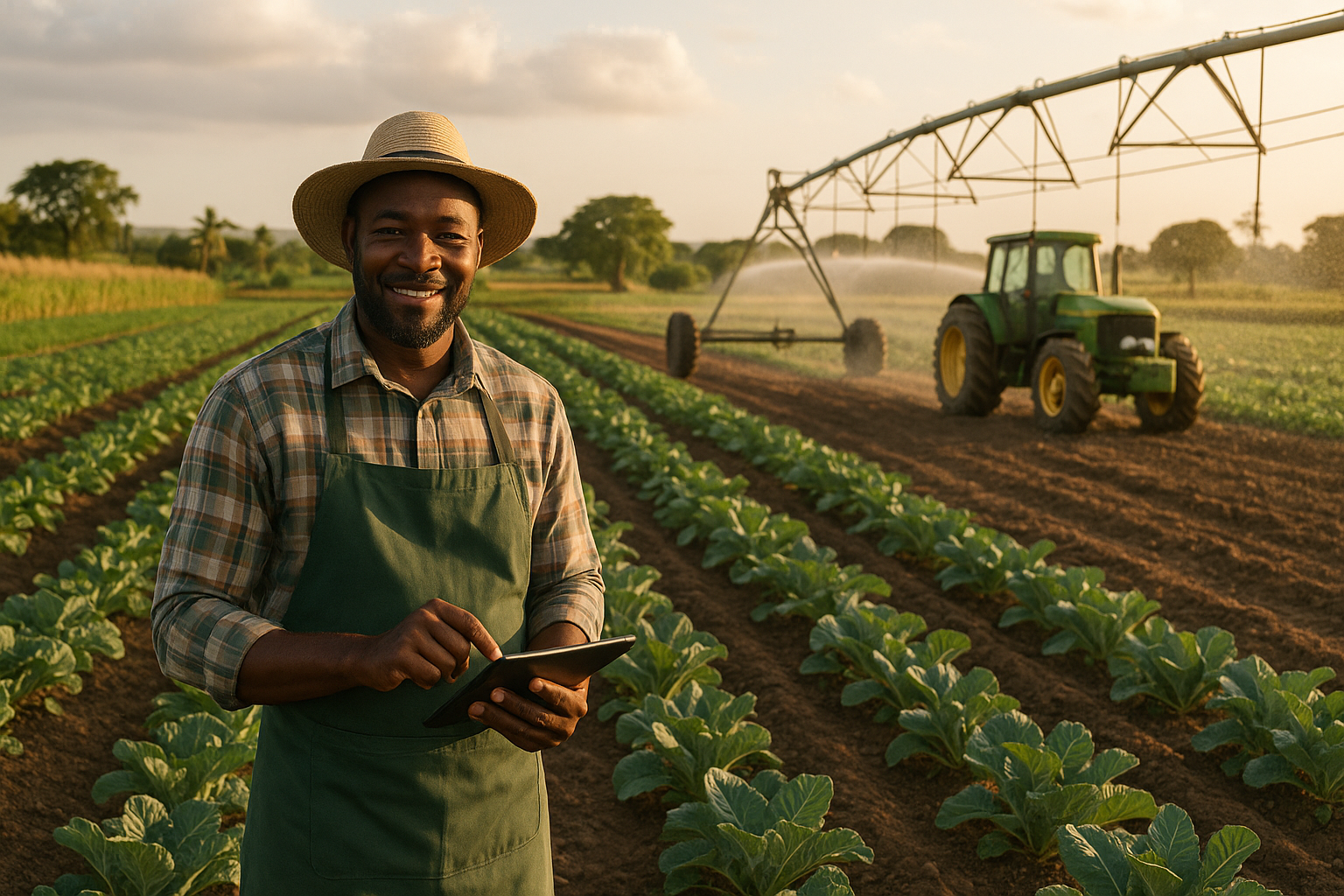
Agricultural technology also offers promising opportunities. Precision farming tools, satellite crop monitoring, improved seed varieties, and modern farm machinery can greatly enhance productivity.
Companies that specialize in agricultural technology solutions can partner with local farms to modernize production systems and increase efficiency.
Export Market Potential
Zimbabwe’s location in Southern Africa provides access to multiple export markets. Agricultural products can be exported to neighboring countries within the Southern African Development Community region, as well as to international markets in Europe, Asia, and the Middle East.
Several export crops including tobacco, citrus fruits, macadamia nuts, and horticultural vegetables already have established international markets.
With improved logistics infrastructure and investment in cold storage facilities, Zimbabwe could significantly expand its agricultural export capacity.
Global demand for sustainably produced food products also creates opportunities for certified organic farming and environmentally responsible agricultural practices.
Government Support for Agriculture
The Zimbabwean government continues to emphasize agriculture as a key pillar of economic growth and food security. Policies have been introduced to support farmers through access to inputs, financing programs, and infrastructure development.
Efforts are also being made to encourage private sector investment in agriculture, particularly in irrigation development, agro processing, and export oriented farming.
Public private partnerships are increasingly being explored to develop large scale farming projects that can improve productivity and strengthen national food systems.
Risks and Considerations
As with any agricultural investment, certain risks must be carefully considered. Climate variability, fluctuating commodity prices, and infrastructure limitations can affect farming operations.
Investors should also conduct thorough due diligence regarding land access arrangements, supply chains, and regulatory requirements.
However, many of these risks can be mitigated through modern farming technologies, irrigation systems, and strategic partnerships with local agricultural stakeholders.
Long term investors who focus on productivity improvements and value addition are well positioned to benefit from Zimbabwe’s agricultural potential.
Conclusion
Zimbabwe possesses many of the natural advantages required for successful commercial agriculture. Fertile soils, favorable climate conditions, and a long tradition of farming have positioned the country as one of Southern Africa’s most promising agricultural regions.
Opportunities exist across the agricultural value chain, including crop production, livestock farming, horticulture exports, agro processing, irrigation development, and agricultural technology.
As global demand for food continues to increase and regional markets expand, Zimbabwe’s agricultural sector is likely to attract growing interest from international investors.
For agribusiness companies, private equity firms, and agricultural technology providers, Zimbabwe offers a fertile landscape of investment opportunities capable of delivering long term growth and sustainable returns.