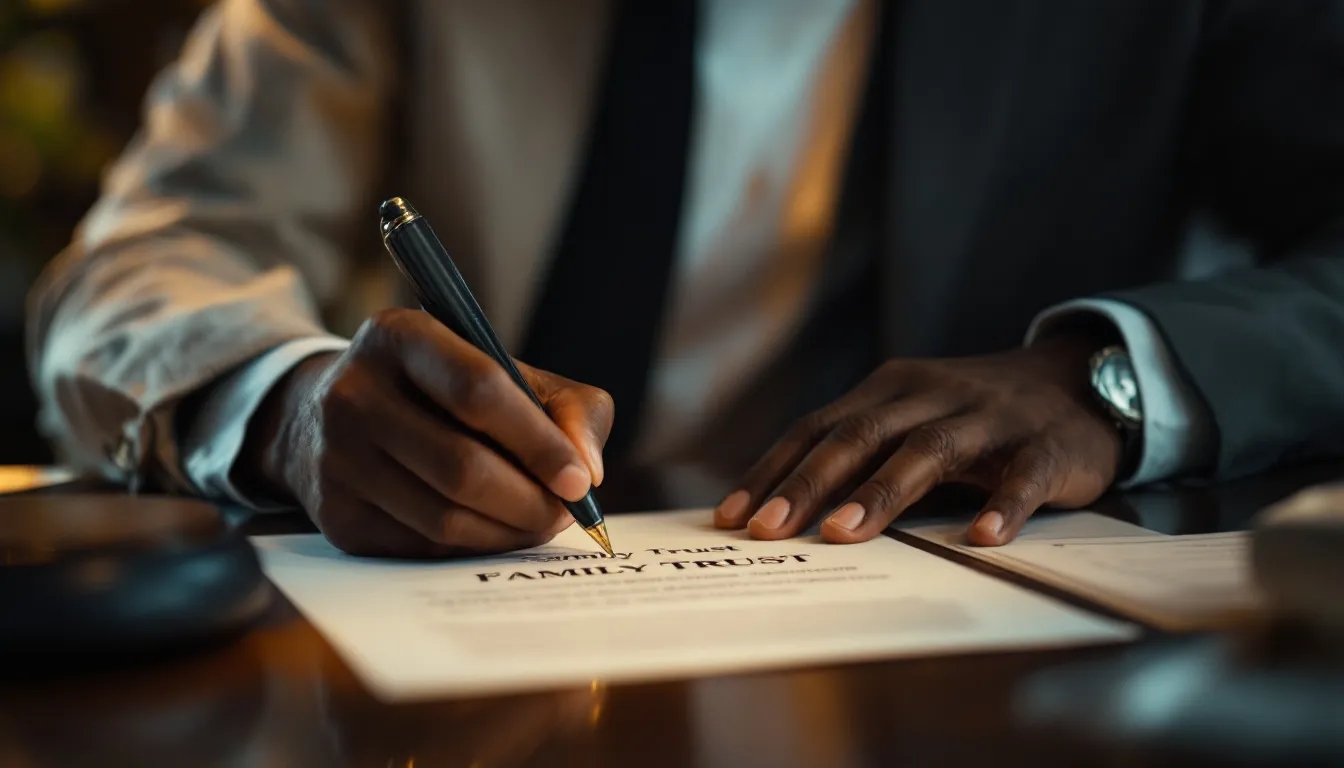
What Happens to Your House If You Die Without a Family Trust?
For many Zimbabweans, owning a home is one of life’s greatest achievements. It represents years of sacrifice, long working hours, careful saving, and a dream of providing security for the next generation. Yet very few people stop to ask one important question:
What actually happens to my house when I die?
It is not an easy conversation to have. Nobody enjoys thinking about death. However, avoiding the discussion does not stop the legal process that begins the moment someone passes away.
Many families only discover the challenges after losing a loved one. What was meant to be a place of comfort can quickly become the centre of disagreements, uncertainty and financial pressure.
This is where proper estate planning becomes invaluable.
Your House Does Not Automatically Belong to Your Family
One of the biggest misconceptions is that a surviving spouse or children automatically become the owners of the family home.
In reality, ownership does not transfer automatically simply because someone was a husband, wife or child.
After a person dies, their estate must be administered according to Zimbabwean law. Depending on the circumstances, this process may involve validating a will, identifying beneficiaries, settling debts and ultimately transferring ownership of property through the appropriate legal procedures.
Until those processes have been completed, the property cannot simply be treated as though it already belongs to the family.
For many people, this comes as a surprise.
The Emotional Cost Can Be Greater Than the Financial Cost
Imagine this scenario.
A father spends thirty years building his family home. He pays off the mortgage, renovates the property and dreams of leaving it to his children.
He unexpectedly passes away.
His wife believes the house automatically becomes hers.
One child believes they should inherit the property because they remained at home to care for their parents.
Another child believes the property should be sold and the proceeds shared equally.
Other relatives begin offering opinions.
Before long, what was once a peaceful family becomes divided.
Sadly, situations like this are not uncommon. Most disputes do not begin because families dislike each other. They begin because there was no clear structure for managing the family’s assets.
Why Families Experience Conflict
The problem is rarely the house itself.
The problem is uncertainty.
When there is no clear succession plan, family members often interpret the deceased’s wishes differently. Emotions are already running high because of grief, and misunderstandings can quickly escalate into lasting disputes.
Questions begin to arise.
Who should live in the house?
Can someone sell it?
Who is responsible for maintenance?
Who pays the rates and other expenses?
What if one beneficiary wants money while another wants to keep the property?
Without proper planning, answering these questions becomes far more difficult than many people realize.
A Family Trust Can Form Part of a Long-Term Plan
Many successful families do not simply think about accumulating wealth.
They think about preserving it.
A family trust is one of the legal structures that may form part of a broader estate planning strategy. Depending on a family’s circumstances, it can provide a framework for managing assets for the benefit of chosen beneficiaries under the guidance of appointed trustees.
Rather than leaving important decisions to chance, a trust can establish clear rules regarding how certain assets are to be managed and used.
It is important to remember that every family’s circumstances are different, and whether a trust is appropriate depends on individual legal and financial advice.
It’s About More Than Wealth
Some people assume family trusts are only for millionaires.
That could not be further from the truth.
You do not need to own a shopping centre or a large business to think about protecting your assets.
If you own:
- A family home
- Rental property
- A small business
- Agricultural land
- Valuable investments
then estate planning is already relevant to you.
In many cases, a person’s house represents the largest asset they will ever own.
Protecting it is not a luxury.
It is responsible planning.
Common Mistakes Families Make
Many homeowners unknowingly make mistakes that can create difficulties later.
These include:
- Assuming children automatically inherit everything.
- Believing a verbal promise is legally sufficient.
- Waiting until retirement before thinking about succession.
- Avoiding conversations about death because they feel uncomfortable.
- Failing to review estate plans after marriage, divorce or purchasing additional property.
Planning should never be delayed until a crisis occurs.
The best decisions are usually made when there is time to consider every option carefully.
The Conversation Every Family Should Have
Estate planning is not simply about legal documents.
It is about communication.
Ask yourself these questions:
If something happened to me tomorrow, would my family know what I wanted?
Would they understand who should manage my property?
Would they know where important documents are kept?
Would my loved ones face unnecessary uncertainty while already dealing with grief?
These are difficult questions, but answering them today could spare your family significant stress tomorrow.
Peace of Mind Is the Greatest Legacy
Many people spend decades building wealth.
Far fewer spend time planning how that wealth should be protected after they are gone.
The greatest gift you can leave your family is not simply a house.
It is clarity.
Knowing that your wishes have been properly documented and that your loved ones have a clear path forward can provide reassurance for everyone involved.
Estate planning is not about expecting the worst.
It is about preparing wisely for the future.
Conclusion
Your home is more than bricks and mortar.
It holds memories, milestones and the hopes you have for your family’s future.
Without proper planning, that same home could become a source of uncertainty at the very moment your loved ones need stability the most.
Whether a family trust, a will or another estate planning arrangement is most suitable will depend on your personal circumstances and should be discussed with qualified legal and financial professionals.
The important thing is not to postpone the conversation.
The best time to plan is while you still have the opportunity to make informed decisions.
Your family’s future deserves nothing less.