A Harare distributor can lose control of margin long before finance sees a monthly report. The warning signs often start at the till: stock on the shelf does not match the system, a return becomes a manual adjustment, and payroll sits in a separate spreadsheet.
Palladium Accounting Zimbabwe gives retailers and distributors one operating view of stock, point of sale and payroll. We implement the system around the controls Zimbabwean enterprises need, including ZIMRA fiscalisation, VAT configuration, payroll reporting and management insight.
For a business with several branches, integration has a practical purpose. It ensures that the sale recorded at a counter changes available stock, updates the customer account where credit applies, and reaches finance without staff re-keying the same transaction.
Why separate retail systems create compliance risk
Many growing retailers add systems in stages. A standalone till manages sales, accounting software receives a manual daily total, and payroll runs elsewhere at month-end. This arrangement can work for a very small operation, but it creates reconciliation work and weakens accountability as transaction volumes rise.
The most common mistake we see is treating fiscalisation as a VAT-only requirement. ZIMRA guidance states that every sale must be recorded through a compliant fiscal device or virtual fiscal device interfaced with the Fiscalisation Data Management System, or FDMS. That obligation also affects taxpayers below the US$25,000 VAT-registration threshold.
A point-of-sale system must therefore do more than print a receipt. It must work with approved fiscalisation technology and support the connection to ZIMRA FDMS, including through the FDMS API where the chosen system connects directly. We assess the operating process before configuration because compliance depends on the transaction flow, not only on the software selection.
VAT requires reliable sales and stock records
VAT registration becomes compulsory when taxable supplies exceed, or are expected to exceed, US$25,000 or its ZiG equivalent in a 12-month period. A retailer that crosses this threshold must issue fiscal tax invoices, credit notes and debit notes, which makes disciplined POS processing essential.
The standard VAT rate is 15.5% as of 1 January 2026. Businesses that retained 15% tax codes after the rate change risk incorrect prices, incorrect VAT returns and difficult customer corrections. Palladium configuration should apply the correct tax code at item level and retain a clear audit trail for sales, returns and stock movements.
A returned item is not simply a negative sale at the till. Where VAT applies, the process may require a fiscal credit note, and a price correction may require a debit note. The person at the counter needs a defined approval route because informal reversals often leave stock, revenue and VAT reporting out of step.
What Palladium brings into one retail operation
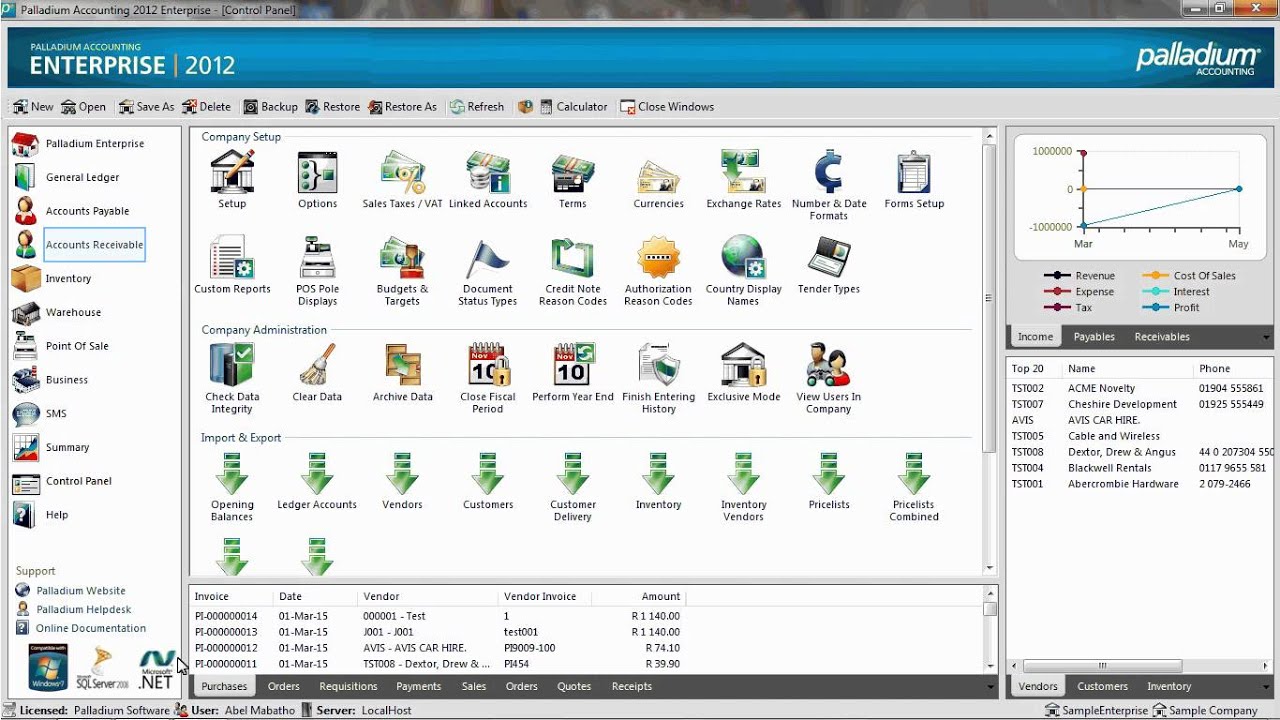
Palladium Accounting supports a connected operating model rather than a collection of reports. The exact design depends on the number of outlets, warehouses, product lines and users, but the core objective stays constant: record each commercial event once and use it across the enterprise.
Stock control that finance can trust
Stock represents cash tied up in the warehouse, shop floor and goods in transit. When sales staff, warehouse staff and accounts teams work from separate records, management cannot see a dependable gross-margin position until long after the decision window has passed.
A properly configured Palladium environment can support item masters, product categories, supplier records, purchasing, sales orders, invoicing and stock movements within one controlled database. It gives management a clearer basis for reviewing slow-moving lines, stock shortages and margin by product category.
We recommend simple approval rules before building complex reporting. Decide who may create items, amend costs, approve purchase orders, process write-offs and authorise returns. Those decisions matter because the system can record a transaction accurately while the underlying commercial decision remains poorly controlled.
Take an illustrative hardware retailer with two outlets, twelve staff and approximately US$40,000 in monthly payroll. Its branch manager accepts damaged-stock returns through informal till corrections, while the warehouse adjusts quantities at the end of each week. The business should first require a reason code, stock inspection and manager approval before processing a fiscal document where required. The cost is mainly management time and system setup, but it prevents the business from treating unexplained shrinkage as a routine adjustment.
Point of sale aligned with fiscalisation
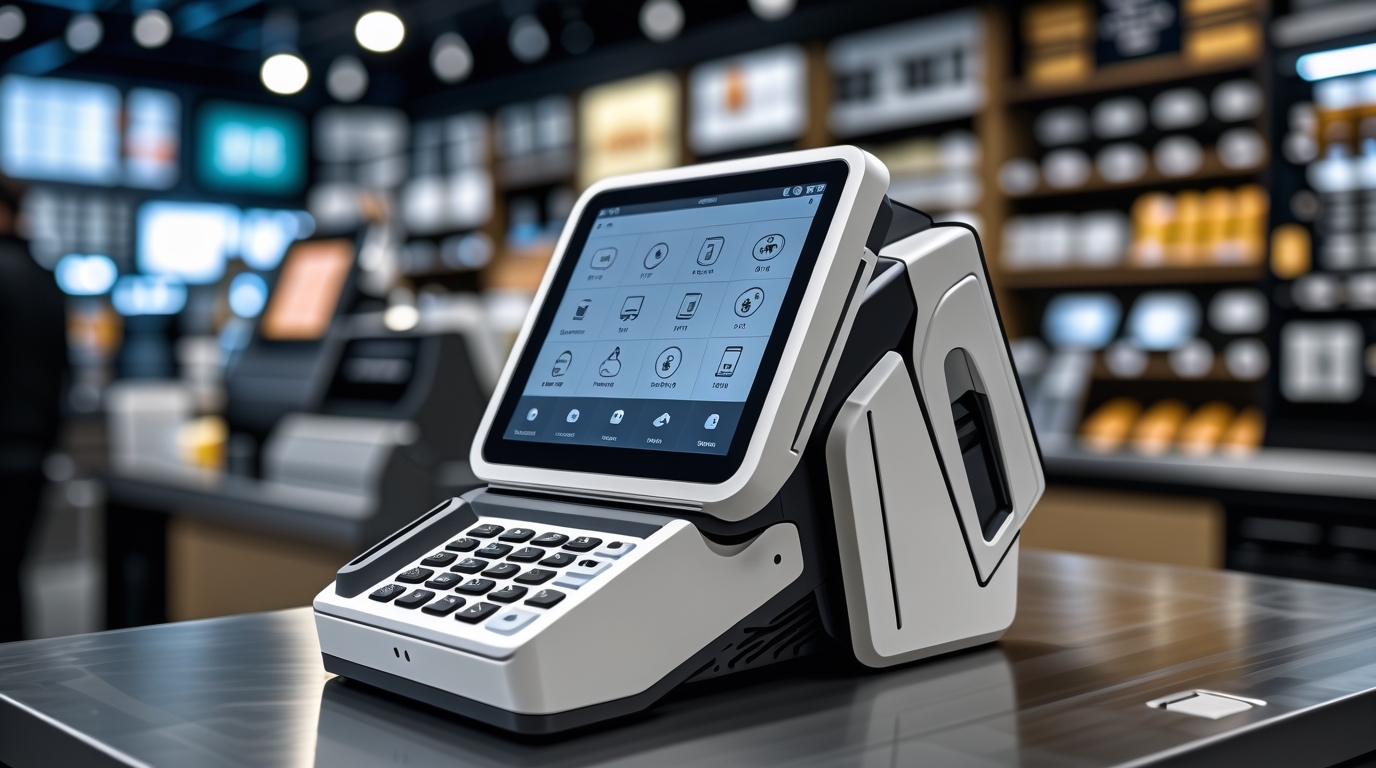
The till is where retail governance becomes visible. A cashier needs a fast, clear workflow, while finance needs complete records and ZIMRA needs fiscalised transaction data. Palladium POS can form part of that controlled workflow when the implementation includes compliant fiscal hardware or virtual fiscal device arrangements and the FDMS interface.
We do not advise a retailer to assume that any POS installation meets the ZIMRA requirement. Confirm that the device, software and interface arrangement meet current approval and compatibility requirements before go-live. ZIMRA guidance can change, and M&J should review the live position with the client before deployment.
Fiscalisation can also create an investment benefit for registered operators. ZIMRA states that a business may claim 50% of the cost of fiscal electronic registers as input tax on VAT 7, with the remaining 50% claimed over two years as special initial allowance on ITF 12C. The eligibility and supporting records need tax review because the claim depends on the taxpayer’s circumstances and the relevant return treatment.
Payroll connected to finance
Payroll errors carry a different kind of risk. They affect employees immediately, create remittance exposure and distract senior management when a correction becomes urgent. A unified operation should allow payroll journals and staff costs to reach the accounting records without unnecessary re-entry.
Payroll must use the current USD or ZiG PAYE tables, calculate the 3% AIDS Levy after applicable credits, submit Form P2 through TaRMS and remit PAYE by the 10th of the following month. Employers must also submit annual ITF16 employee data within 30 days after year-end. These deadlines make it unwise to leave payroll reconciliation until the final days of the month.
NSSA contributions under the Pension and Other Benefits Scheme are currently 4.5% for the employee and 4.5% for the employer, capped at US$700 insurable earnings. Employers e-file the monthly P4 return through the NSSA self-service portal and use P4A as remittance advice. Configure the payroll process to separate employee deductions from employer cost because they serve different accounting and compliance purposes.
Consider an illustrative food distributor with 45 employees, three delivery teams and monthly sales commissions. Its payroll clerk maintains commissions in a workbook, then manually posts a total to accounts after paying staff. The business should import or approve commission data through a controlled payroll process, reconcile the payroll journal to the general ledger, and review the P2 and P4 figures before submission. It may not need a highly customised payroll build if its pay structures remain straightforward, but it does need a documented monthly close.
Implementation decisions that protect the investment
Software does not repair inconsistent master data or unclear authority. Before implementation, we work with management to define the operating model: which branches sell, which warehouses fulfil, which users approve transactions, and which reports directors need each week.
For a single-store retailer with modest stock and no expansion plan, do not overbuild the solution. Start with compliant POS, clean item records, purchasing controls and a daily cash-up process. Add advanced warehouse, multi-branch or reporting features when the transaction volume and management need justify them.
For a distributor supplying retailers on credit, the priority changes. Customer credit limits, sales-order approval, picking controls, delivery evidence and debtor ageing should sit ahead of cosmetic dashboard work. Cash often becomes constrained by unpaid invoices before stock reporting becomes the central problem.
A practical implementation sequence
We normally begin by mapping the current transaction journey from purchase order to payment, sale to cash receipt, and payroll input to statutory return. That exercise exposes duplicate capture points and tells us which data needs cleansing before migration.
Next, we establish the chart of accounts, item structure, tax codes, user roles and approval limits. The VAT rate changed to 15.5% on 1 January 2026, so price lists and tax configuration require particular care for businesses migrating older data.
We then test realistic transactions. Test a cash sale, a credit sale, a discount, a return, a damaged item, a stock transfer, a supplier invoice, a payroll run and a month-end close. A successful test asks whether the records agree across POS, stock, accounts and compliance outputs, not whether a screen accepts an entry.
Training should use the roles people actually perform. Cashiers need sale, return and cash-up procedures. Warehouse teams need receiving and transfer procedures. Finance teams need reconciliation, exception review, VAT reporting and payroll close routines.
Compliance beyond the retail floor
An integrated system strengthens day-to-day control, but it does not replace the company’s wider statutory obligations. Directors should keep ownership of the compliance calendar and give each filing a named internal owner.
The Companies Registry requires company annual returns through the CIPZ electronic-registry route. The Companies and Other Business Entities Act provides for filing within 21 days of the incorporation, registration or re-registration anniversary. Confirm the live CIPZ process before filing because portal requirements and operational procedures can change.
Company registration and tax registration do not qualify a distributor to bid for public contracts. A business seeking public-sector supply opportunities requires PRAZ registration. For 2026, domestic bidder annual fees are US$50 for micro enterprises, US$60 for SMEs and US$75 for other domestic bidders, so procurement planning should include the right registration category.
Foreign investors and some domestic investment projects may also need to consider a ZIDA investment licence. The prescribed application fee is US$500 and issuance is US$4,500, while local-investor fees are payable in ZiG equivalent at the interbank rate. Licence suitability depends on the proposed investment, so we advise confirming the position before committing to an application.
Retailers that purchase foreign cloud services or e-commerce tools should also take advice on the Digital Services Withholding Tax changes effective from 1 January 2026. The tax treatment can depend on the supplier, intermediary and payment arrangement. Do not assume a foreign software subscription falls outside local tax review because the invoice arrives from outside Zimbabwe.
Governance reports executives should review
A system becomes an executive tool when leaders review exceptions, not only totals. Weekly reports should show sales by branch or channel, gross margin, stock ageing, negative stock, returns, discounts, cash variances and overdue debtors where credit applies.
Each report needs an owner and a response. A negative-stock report without an investigation process merely documents a control failure. A discount report without approval thresholds leaves margin decisions to individual cashiers or branch managers.
We also recommend a monthly compliance close that brings together VAT, PAYE, NSSA, fiscalisation exceptions and bank reconciliation. Finance should not sign off on a month merely because the trial balance balances. The stronger question is whether sales, stock, payroll, statutory returns and cash records tell the same commercial story.
Frequently Asked Questions
Does Palladium replace a fiscal device in Zimbabwe?
No. Palladium can support the POS and accounting workflow, but the business must still use a compliant fiscal device or virtual fiscal device interfaced with ZIMRA FDMS. We confirm the chosen implementation arrangement before go-live.
Must a retailer register for VAT before using fiscalised POS?
No. ZIMRA fiscalisation requirements extend beyond VAT-registered operators. VAT registration becomes compulsory when taxable supplies exceed, or are expected to exceed, US$25,000 or its ZiG equivalent in 12 months.
Can Palladium manage payroll for Zimbabwean employees?
Palladium can support an integrated accounting and payroll operating process, subject to the selected configuration and payroll requirements. Payroll teams must still apply current PAYE tables, the 3% AIDS Levy, NSSA contribution rules, TaRMS Form P2 submissions and NSSA P4 e-filing requirements.
What should we prepare before a Palladium implementation?
Prepare your item list, supplier and customer records, opening stock quantities and values, chart of accounts, current price lists, user roles and recent sales and payroll records. We also recommend documenting how you handle returns, discounts, cash-ups, damaged stock and branch transfers before configuration begins.
The statutory figures in this guide reflect official Zimbabwean source material reviewed on 7 October 2026, including ZIMRA, NSSA, CIPZ, PRAZ, ZIDA and the Companies and Other Business Entities Act. An M&J team member should review tax, payroll and registry requirements against current notices before publication or implementation.
Ready to bring stock, POS, payroll and compliance reporting into one controlled operation? Visit the Palladium Accounting Zimbabwe hub page to speak with our team about your implementation requirements.