For decades, the relationship between Zimbabwean businesses and the tax authority followed a familiar rhythm. You recorded your sales, tallied your expenses, and filed a periodic return. The Zimbabwe Revenue Authority, or ZIMRA, would accept your filing, and if questions arose, an audit might follow months or even years later. That rhythm is now broken. The taxman is no longer waiting for your return. The taxman is already inside your system.
Zimbabwe is in the midst of the most profound shift in tax administration since independence. The integration of the Tax and Revenue Management System, known as TaRMS, with the Fiscalisation Data Management System, or FDMS, has moved the country from periodic auditing to continuous, real-time monitoring. This is not an incremental improvement. It is a fundamental rewiring of how business transactions are recorded, verified, and taxed. The smart invoice era has begun, and every business in Zimbabwe must understand what it means.
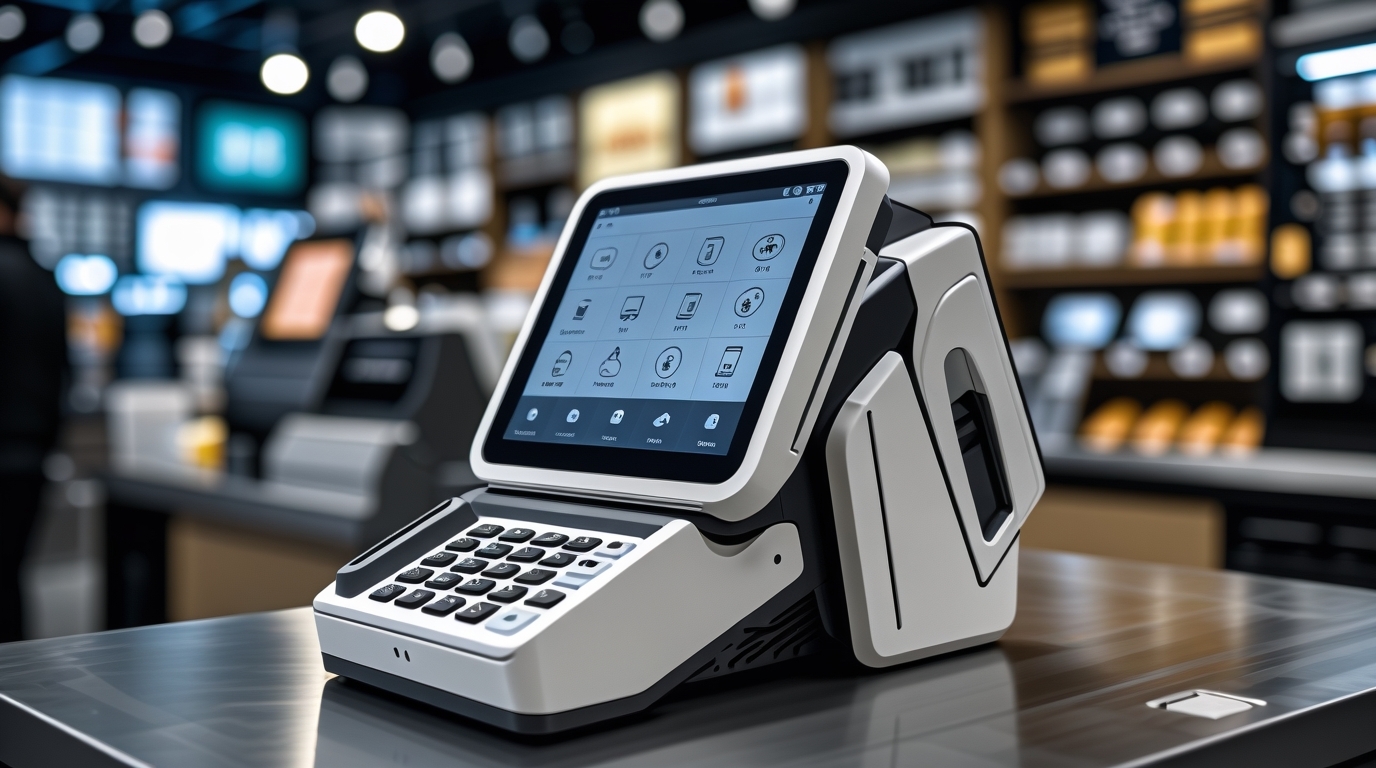
The engine of this transformation is the TaRMS-FDMS integration, formalised under Public Notice 63 of 2025. At its core, the system connects every VAT-registered business’s point of sale directly to ZIMRA’s servers. When you make a sale, your fiscal device or software sends the transaction data to the FDMS in real time. When you file your VAT return, TaRMS does not ask you to manually enter your purchase invoices. It pre-fills your Input Tax schedule based on what your suppliers have already reported to the FDMS. The system is designed to be a closed loop, and that loop has profound implications for every business in the country.
The most immediate and visible benefit of this integration is efficiency. For the compliant taxpayer, ZIMRA has moved from a paper-heavy bureaucracy to a modern digital partner. The system eliminates the tedious manual entry of invoices, reducing the risk of human error in typing invoice numbers or amounts. It allows for faster refund processing because ZIMRA has real-time access to the mirror data of every transaction. It provides a single account view where you can see your sales data, purchase claims, and tax status in one place. And it creates a level playing field by forcing informal or semi-formal operators to either comply or lose their ability to do business with the government and large corporations.
But efficiency is only one side of the coin. The flip side is dependency, and this is where the new system fundamentally changes the business landscape. Under the old regime, if you held a physical tax invoice from a supplier, you could claim the input VAT. The supplier’s compliance was their problem, not yours. Under the new system, your ability to claim input tax is now entirely dependent on your supplier’s compliance. If your supplier’s fiscal machine is broken, offline, or they simply fail to upload the data, that invoice will not appear in your TaRMS portal. You cannot claim the fifteen and a half percent VAT, even if you have a physical receipt in your hand. The compliance of your trading partners is now a direct input into your own tax position.
This dependency creates a cascade of new risks. The most immediate is the supplier compliance risk. A supplier who is not fully fiscalised is not just a compliance risk to themselves; they are a financial risk to every business that buys from them. The system automatically denies input tax credits for purchases from non-compliant suppliers, shifting the burden of supplier due diligence onto every purchasing business. This is a profound change. It means that procurement decisions must now factor in tax compliance as a material consideration alongside price, quality, and delivery.
The integration also introduces what one industry observer has termed the invisible invoice trap. Under the new rules, any invoice dated before December 1, 2025, that was not claimed by December 10, 2025, is now effectively dead. The upgraded system will not accept them, leading to a direct financial loss for businesses that were slow to reconcile their books. This hard cutoff has already caught many businesses off guard, resulting in lost input tax credits that can never be recovered.
Technical instability adds another layer of uncertainty. High-traffic periods near the tenth of the month, when returns are due, have historically caused the TaRMS portal to slow down or glitch. With the new integration, a system failure at ZIMRA or a network outage at your premises can prevent you from issuing valid invoices. A business that cannot issue a valid fiscal invoice cannot lawfully complete a sale. The tax clearance certificate, or ITF263, is now strictly linked to full compliance under the Fiscalisation Data Management System. If you are not fully fiscalised, you will not receive a tax clearance certificate. And without that certificate, you face a thirty percent withholding tax on every contract payment and exclusion from every government tender.
The system’s multi-currency capability adds a further dimension of complexity. The FDMS is designed to track currency-specific data, and the 2025/2026 tax year requires reporting in the currency of trade. Fiscal devices and software must be configured to differentiate between United States dollars and the Zimbabwe Gold currency. The system tracks the ratio of foreign currency to local currency revenue in real time. If your United States dollar revenue exceeds fifty percent, you must pay fifty percent of your tax in that currency. Attempting to reclassify cash sales at year-end will now trigger a system red flag.
The shift also introduces the matching rule, which is arguably the single biggest change in how input VAT is claimed. When you log in to file your VAT return, ZIMRA now pre-fills your Input Tax schedule based on what your suppliers have fiscalised. If a supplier has not uploaded a transaction to the FDMS, it does not exist for the purposes of your return. The days of claiming input tax based on a physical invoice that your supplier forgot to report are over. The system matches every claim to a corresponding sale, and where there is no match, there is no credit.
For large corporates and multinationals with sophisticated enterprise resource planning systems, the transition to virtual fiscalisation offers a pathway to compliance that is less reliant on expensive hardware. API integration allows businesses to interface directly with ZIMRA via their accounting software. Every invoice must now have a verifiable QR code. If a customer scans that code and it does not show as valid on the ZIMRA portal, they cannot claim input VAT, and the seller will likely lose their business.
For small and medium enterprises, the picture is more challenging. The upfront cost of fiscal devices, whether hardware or software-based virtual fiscal devices, remains a barrier. While ZIMRA offers a fifty percent cost-claim incentive, many SMEs lack the technical and financial capacity to comply fully under the current framework. The Small and Medium Enterprises Association of Zimbabwe has warned that the tax framework is designed for organisations that have chartered accountants, not for the typical small business owner. For many of these businesses, full compliance is an existential threat to their already thin margins.
The new system is also binary. You are either compliant or you are not. There is less room for the administrative explanations that were possible under the old manual system. The days of negotiating with a tax officer over a missing invoice are fading. The system expects a return from every registered taxpayer, and if you remain silent, it will eventually generate an estimated assessment that includes penalties which can be difficult to reverse once they are on your ledger.
Despite these challenges, the direction of travel is clear and irreversible. ZIMRA has already registered approximately one hundred thousand new taxpayers in the past year, with a further target of fifty thousand in the current year. The authority is using artificial intelligence and data analytics to track taxpayer behaviour and is developing a mobile app that will enable clients in the informal sector to fiscalise using their phones. The tax net is widening, and the technology to enforce compliance is becoming more sophisticated.
The smart invoice era demands a new approach to doing business in Zimbabwe. The first step is to audit your supply chain. Know which of your suppliers are fully fiscalised and which are not. A non-compliant supplier is no longer just a vendor; they are a direct threat to your input tax claims and your own tax clearance status. The second step is to reconcile your TaRMS ledger regularly, not just at month-end. Waiting until the tenth of the month to discover that a major supplier failed to fiscalise an invoice leaves you with no time to remedy the situation. The third step is to ensure your master data in TaRMS is accurate and current. Notifications for audits, assessments, and tax clearance certificates are sent to the email on file. An outdated email address can result in a missed seven-day window to respond to a query, leading to an automatic and costly assessment.
The fourth step is to embrace the technology rather than resist it. For businesses with robust information and communications technology infrastructure, virtual fiscalisation offers a path to compliance that eliminates the need for expensive specialised hardware. For smaller businesses, the forthcoming ZIMRA mobile app may provide a more accessible entry point. The fifth step is to train your staff. The smart invoice era is not just a back-office accounting change. It affects everyone who touches a sale, from the cashier at the point of sale to the procurement officer selecting suppliers. Everyone must understand that the old ways of doing business no longer work.
Zimbabwe’s digital tax shift is not unique in the region. South Africa is moving toward a similar continuous transaction control model, with a phased rollout expected by 2028. Zambia has implemented its Smart Invoice system, which covers multiple tax types. But Zimbabwe’s matching rule is arguably the most aggressive enforcement tool currently in use in the Southern African Development Community. It places a unique burden on businesses to police their own supply chains in a way that no other regional system demands.
Conclusion
The smart invoice era is not a temporary policy experiment. It is the new baseline for doing business in Zimbabwe. The businesses that will thrive in this environment are those that recognise the shift for what it is: a structural change in the relationship between the state, the market, and the individual enterprise. Compliance is no longer a periodic back-office function. It is a frontline operational imperative that touches every transaction, every supplier relationship, and every customer interaction. The smart invoice has arrived. The only question is whether your business is smart enough to keep up.