Introduction: Taxing the Invisible Economy
Zimbabwe’s informal sector is not small, it is the economy.
From market traders and transport operators to small-scale manufacturers and cross-border entrepreneurs, a significant portion of economic activity exists outside the formal tax net. In response, the Zimbabwe Revenue Authority (ZIMRA) has expanded the use of presumptive taxes, fixed or estimated tax obligations applied to businesses that are difficult to assess using traditional accounting methods.
The intention is clear: broaden the tax base and encourage formalization.
But the real question is more complex: Is the presumptive tax regime a bridge into the formal economy—or a new burden on already vulnerable traders?
What Is the Presumptive Tax Regime?
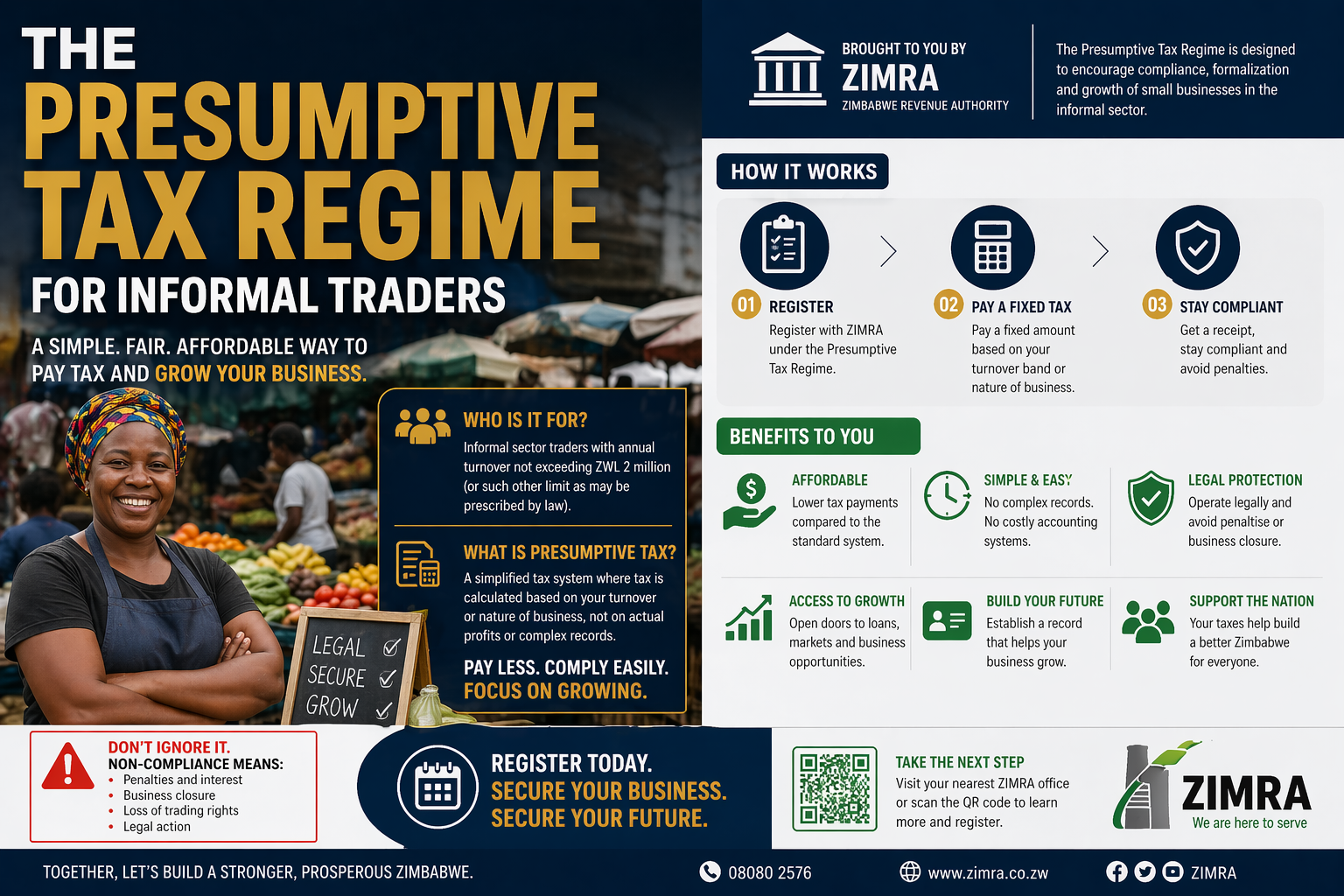
Presumptive tax is a simplified taxation method where liability is based on:
- Type of business (e.g., taxis, hair salons, small shops)
- Presumed income levels rather than actual profits
- Fixed fees or turnover estimates
It is designed for businesses that:
- Do not maintain formal accounting records
- Operate largely in cash
- Fall below or outside standard corporate tax frameworks
In theory, it reduces administrative complexity. In practice, its impact varies widely.
The Case for Presumptive Tax: Why It Makes Policy Sense
1. Expanding the Tax Base
Zimbabwe’s formal tax base is narrow, placing disproportionate pressure on registered companies and salaried employees. Presumptive taxes allow the state to:
- Capture revenue from previously untaxed sectors
- Improve fiscal sustainability
- Distribute the tax burden more broadly
From a policy perspective, this is difficult to argue against.
2. A Pathway to Formalization
Presumptive taxation can act as an entry point into the formal economy by:
- Introducing traders to tax compliance gradually
- Creating a record of economic activity
- Encouraging registration with authorities
Over time, this can support access to:
- Banking services
- Credit facilities
- Government tenders
In this sense, presumptive tax is meant to be a stepping stone, not a final destination.
3. Administrative Simplicity
For both the tax authority and traders:
- No complex bookkeeping is required
- Compliance is predictable and standardized
- Collection is easier to enforce
This simplicity is critical in a high-informality environment.
The Case Against It: Where the Burden Emerges
1. Disconnect from Economic Reality
The biggest criticism is straightforward: Presumptive tax assumes income that may not exist.
Many informal traders operate on thin, unstable margins. Fixed tax obligations can:
- Ignore seasonal income fluctuations
- Penalize low-earning businesses
- Create cash flow strain
In difficult months, the tax becomes a liability disconnected from actual performance.
2. Perceived as Punitive, Not Enabling
For many traders, the regime is not seen as a pathway to formalization, but as:
- Another cost of doing business
- An enforcement mechanism without corresponding benefits
Without visible incentives (like access to finance or infrastructure), compliance feels one-sided.
3. Risk of Driving Further Informality
Ironically, overly aggressive enforcement can produce the opposite effect:
- Traders avoid registration altogether
- Businesses operate more discreetly
- Economic activity becomes harder, not easier to track
A tax system that is seen as unfair often reduces voluntary compliance.
4. Limited Integration with Broader Support Systems
Formalization is not just about taxation, it requires:
- Access to markets
- Legal protections
- Financial inclusion
- Business development support
Without these, taxation alone does not transform informal businesses into sustainable formal enterprises.
The Director’s and Advisor’s Perspective: Why This Matters Beyond Traders
Even formal businesses should pay attention.
Why?
- Informal suppliers and partners may face rising compliance pressure
- Cost structures across value chains may shift
- Regulatory scrutiny is expanding across all business segments
For advisors, this creates an opportunity to:
- Support informal clients transitioning into compliance
- Offer bookkeeping, registration, and tax advisory services
- Build long-term client relationships at the early stages of formalization
So-Bridge or Burden? The Answer Depends on Execution
The presumptive tax regime is neither inherently good nor bad. Its impact depends on how it is implemented.
It becomes a bridge when**:**
- Tax rates are realistic and flexible
- Compliance is linked to tangible benefits
- Traders are supported with education and tools
- There is a clear pathway to full formalization
It becomes a burden when**:**
- Taxes are rigid and disconnected from income
- Enforcement is aggressive without support
- Benefits of formalization are unclear or inaccessible
What Needs to Change: A Balanced Approach
For policymakers and institutions like the Zimbabwe Revenue Authority, a more effective approach would include:
- Graduated tax systems that adjust to business size and performance
- Incentives for compliance, such as access to funding or tax credits
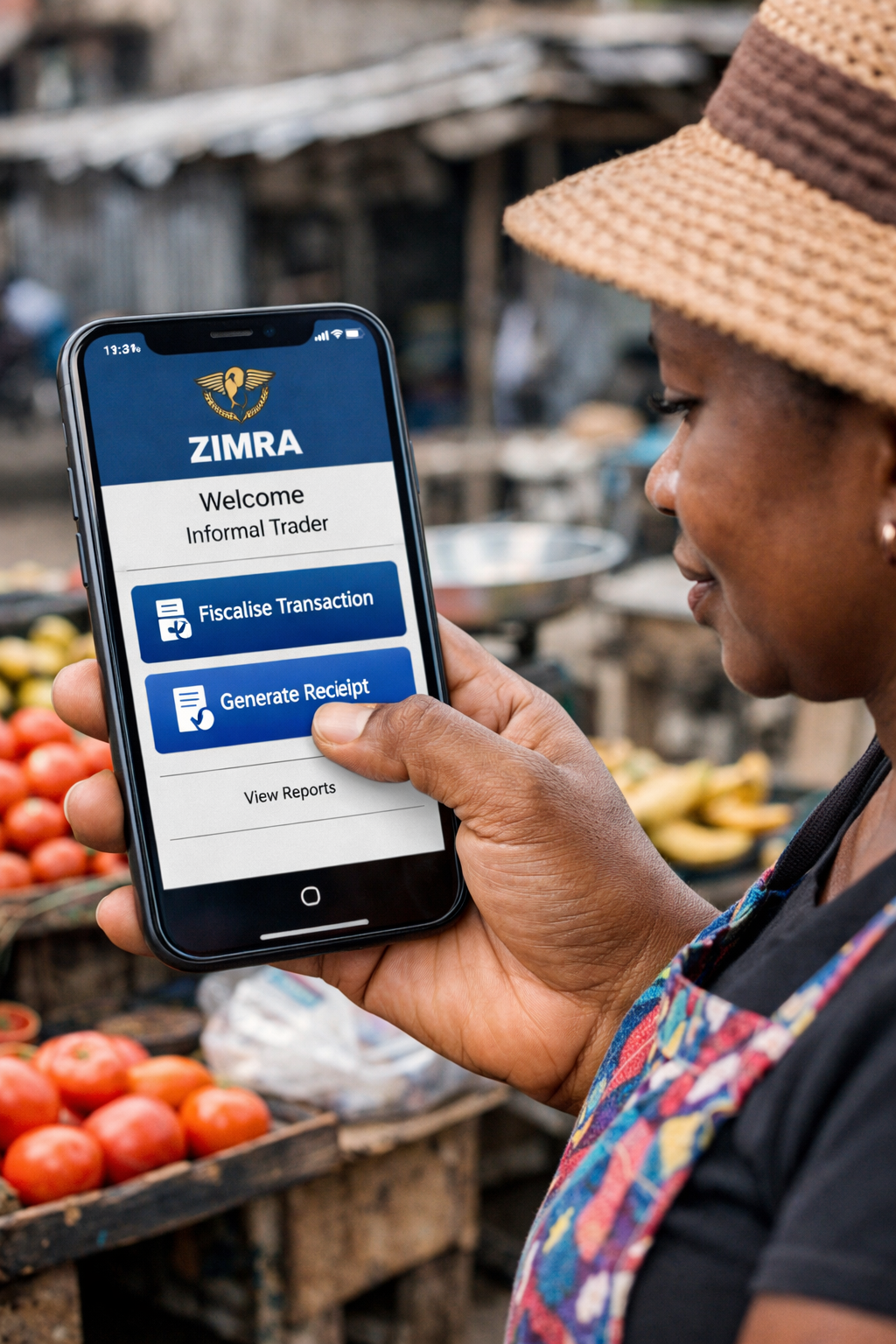
- Digital tools for simplified record-keeping
- Education campaigns that explain not just the “what,” but the “why”
Formalizations must feel like an upgrade, not a penalty.
Call to Action: Moving from Compliance to Strategy
If you are an informal trader, SME owner, or advisor working within Zimbabwe’s evolving tax environment, the question is no longer whether presumptive tax applies, it’s how you respond to it.
Start here:
- Assess whether your current tax position aligns with your actual business activity
- Consider transitioning toward basic record-keeping, even simple cash tracking makes a difference
- Seek professional guidance to avoid overpayment or penalties
For businesses and advisors: Don’t treat presumptive tax as a side issue. It is a signal of where the regulatory environment is heading.
Conclusion: Formalization Is a Journey, Not a Tax Bill
Zimbabwe’s presumptive tax regime reflects a broader reality: the informal economy can no longer remain invisible.
But taxation alone cannot drive transformation.
If designed and implemented correctly, presumptive tax can be the first step toward inclusion, growth, and sustainability. If not, it risks becoming just another pressure point in an already fragile ecosystem.
The real challenge is not collecting tax from informal traders, it is making formalization worth their while.