Introduction
Every year, thousands of businesses walk away from the Zimbabwe International Trade Fair (ZITF) with the same asset:
A list of leads.
Business cards. WhatsApp numbers. Email addresses. Verbal expressions of interest.
And every year, most of those leads go cold.
Not because the opportunity wasn’t real but because there was no post-event execution strategy.
The uncomfortable truth is this:
ZITF does not create revenue. Execution after ZITF does.
If you are serious about turning exhibition exposure into actual market share, you need more than presence.
You need a system.
Why Most ZITF Leads Never Convert
Before building the solution, it’s important to understand the failure points.
Most businesses lose momentum immediately after the event due to:
- Delayed follow-ups
- Poor lead qualification
- Lack of structured sales pipelines
- No clear value proposition beyond the exhibition
- Weak internal coordination between sales and operations
Leads are perishable.
The longer you wait, the lower your conversion probability.
The Strategic Shift: From Lead Collection to Pipeline Management
Successful companies do not treat ZITF as a marketing event.
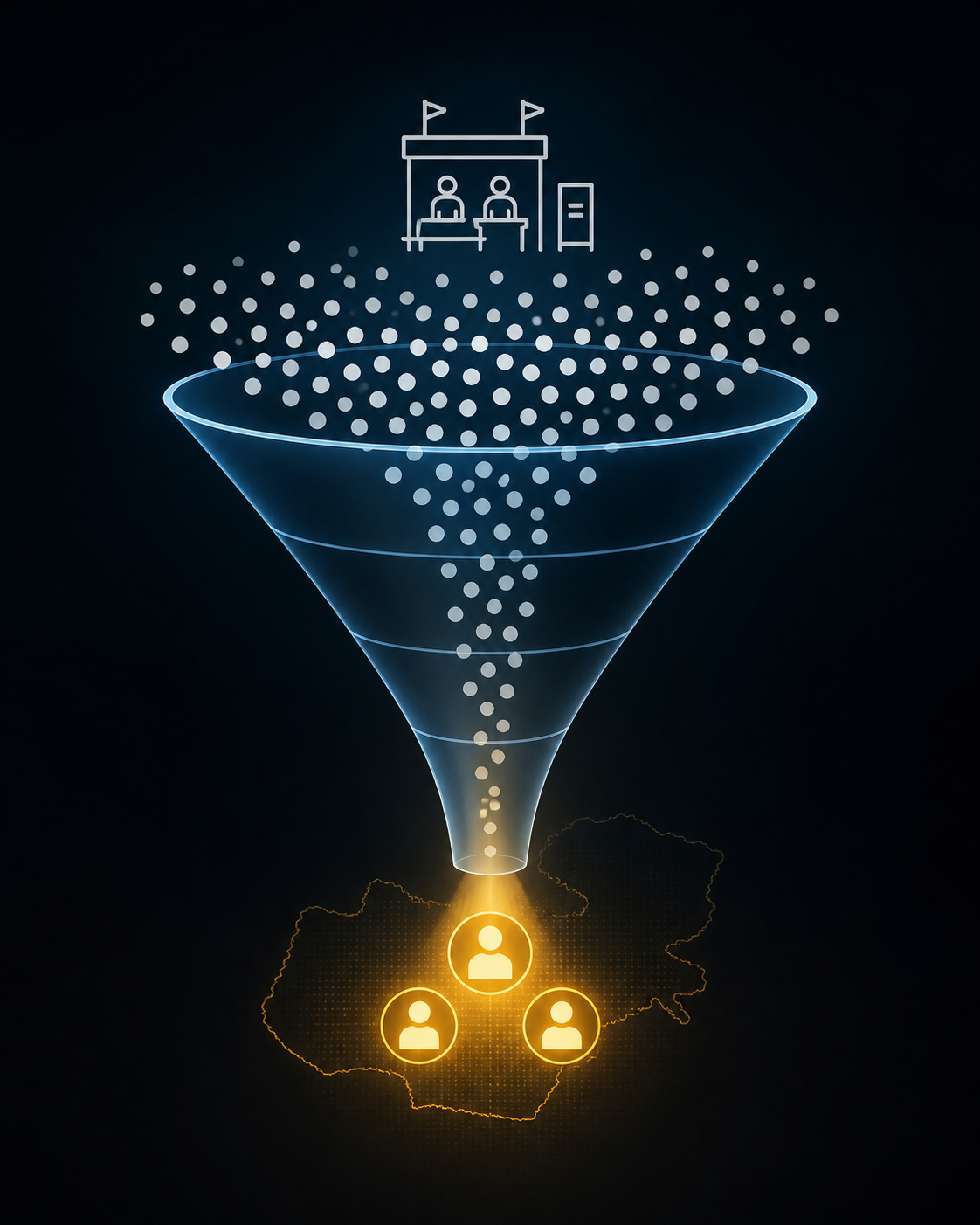
They treat it as the top of a sales funnel.
That means:
- Every lead is categorized
- Every interaction is tracked
- Every opportunity is moved through defined stages
The objective is not to “follow up.”
It is to systematically convert interest into revenue.
The Post-ZITF Conversion Framework
To turn leads into sustainable market share, you need a structured approach.
Step 1: Immediate Lead Segmentation (Within 48 Hours)
Not all leads are equal.
Segment them into:
- Hot leads – ready to buy or engage immediately
- Warm leads – interested but need nurturing
- Cold leads – exploratory or long-term prospects
This determines:
- Follow-up speed
- Communication style
- Resource allocation
Without segmentation, you waste time on the wrong prospects.
Step 2: Speed of Follow-Up Is Your First Competitive Advantage
The first company to follow up professionally often wins the deal.
Best practice:
- Contact hot leads within 24–48 hours
- Reference your exact conversation at ZITF
- Provide clear next steps (meeting, proposal, demo)
Generic messages kill momentum.
Contextual, personalized outreach builds trust.
Step 3: Move from Conversation to Commitment
Many businesses stay stuck in endless conversations.
Your goal is to transition quickly into:
- Meetings
- Proposals
- Site visits
- Pilot projects
Each interaction should move the lead one step closer to commitment.
If it doesn’t, you are not progressing, you are maintaining.
Step 4: Build a Structured Sales Pipeline
A pipeline turns chaos into clarity.
Define stages such as:
- Lead captured
- Contacted
- Qualified
- Proposal sent
- Negotiation
- Closed (won/lost)
Track:
- Conversion rates at each stage
- Time spent in each stage
- Revenue potential
This allows you to identify bottlenecks and optimize performance.
Step 5: Align Sales with Operations
One of the biggest hidden risks is over-promising at the exhibition stage.
If sales team:
- Promise unrealistic timelines
- Commit to unscalable volumes
- Misrepresent capabilities
You may close deals, but fail to deliver.
Sustainable market share comes from:
Execution consistency, not just deal volume.
Step 6: Nurture Long-Term Opportunities
Not every lead will convert immediately.
But that doesn’t mean they are lost.
Build a nurturing system:
- Email updates
- Product education
- Case studies
- Periodic check-ins
Many high-value deals close months after the initial interaction.
Turning Leads into Market Share (Not Just Revenue)
Revenue is transactional.
Market share is strategic.
To move from one to the other, you must:
1. Focus on Repeat Business
Your first sale is just the entry point.
Real growth comes from:
- Retention
- Upselling
- Long-term contracts
2. Build Relationships, Not Just Transactions
ZITF creates introductions.
You must build:
- Trust
- Reliability
- Consistent communication
This is especially critical in B2B environments.
3. Use Early Wins as Case Studies
Every converted lead becomes:
- Proof of concept
- Marketing material
- Sales leverage
Document results and use them to close future deals faster.
4. Expand Within Client Networks
One satisfied client can unlock:
- Referrals
- New departments
- Related businesses
This is how market share compounds.
Technology as a Force Multiplier
Manual follow-up is not scalable.
Use tools such as:
- CRM systems (to track leads and interactions)
- Email automation (for nurturing sequences)
- Analytics dashboards (to monitor performance)
Even simple systems dramatically improve conversion rates.
Common Post-ZITF Mistakes to Avoid
1. Waiting Too Long to Follow Up Speed is critical. Delay kills deals.
2. Treating All Leads the Same Segmentation is non-negotiable.
3. Failing to Track Progress What you don’t measure, you can’t improve.
4. Over-Promising at the Event Short-term wins can destroy long-term credibility.
5. Ignoring Long-Term Leads Today’s “cold” lead can become tomorrow’s biggest client.
A Practical Example: From Booth to Market Share
A manufacturing company exhibits at ZITF and generates 200 leads.
Without a system:
- 80% go cold
- 15% convert randomly
- 5% become long-term clients
With a structured strategy:
- 100 leads are actively nurtured
- 40 moves into serious discussions
- 20 converts into clients
- 10 become repeat customers
The difference is not the event.
It is the execution model.
The Bigger Insight: Events Create Opportunity, Systems Capture It
Trade fairs like the Zimbabwe International Trade Fair are powerful, but temporary.
They create:
- Visibility
- Access
- Initial trust
But they do not create:
- Systems
- Processes
- Sustainable growth
That responsibility sits entirely with the business.
Conclusion: The Real Work Starts After the Exhibition Ends
ZITF is not the finish line.
It is the starting point.
The companies that win are not the ones with the biggest stands or the most foot traffic.
They are the ones with:
- The fastest follow-up
- The clearest pipeline
- The strongest execution discipline
Because in the end, leads do not become revenue automatically.
And revenue does not become market share by accident.
It takes:
- Structure
- Consistency
- Strategic intent
If you treat ZITF as a one-week event, you will get one-week results.
If you treat it as the top of a long-term growth system, you will build something far more valuable:
Sustainable, compounding market share.
Call to Action
If you’ve just come out of ZITF, or are preparing for the next one, don’t focus only on how many leads you collect.
Focus on what happens after.
Build your pipeline. Design your follow-up system. Align your team for execution.
Because the difference between missed opportunity and measurable growth is not the event itself.
It is what you do next.